


drewab
-
Posts
348 -
Joined
-
Last visited
Content Type
Profiles
Forums
Blogs
Media Demo
Downloads
Gallery
Store
Everything posted by drewab
-
Recommend Videos and Podcasts on Health and Nutrition
drewab replied to Ron Put's topic in General Health and Longevity
In this video, Mic examines whether refined sugar is linked to cancer. Although it's widely known that refined sugar is unhealthy and consumption is minimal for folks on this website, the topic is still intriguing (particularly the strength of the relationship and mechanism). The idea that "many cancer cells selectively depend on glucose for energy, potentially using 50-100 times more glucose than normal cells" is explored. There is also a fascinating paper which shows, contrary to some beliefs, that breast cancer cells can indeed use ketones for fuel. Mic also explores evidence suggesting that maintaining low fasting glucose levels is beneficial, which is expected as I suspect it's an overall marker of health and insulin sensitivity. Remarkably, one study indicated that metformin can reduce cancer incidence by 30-50%... which is insane! Among various types of cancer, the link between sugar intake and increased breast cancer risk appears to be the most substantiated. There's a lot packed into this video and it might be worth a watch. Maybe we'll see sugar get recognized as a carcinogen (or probably carcinogen) at some point... I sure hope so. -
Your low calorie intake and high fibre intake are very impressive to say the least at about 2077 kcal and 87/g daily respectively. Every time I look at your food list it makes my mouth water as it looks like an incredibly tasty way to practice CR that is not only micronutrient rich, but probably quite satiating. The reduction in your biological age vs. chronological age continues to be rock solid. Keep up the great videos and great work!
-
Recommend Videos and Podcasts on Health and Nutrition
drewab replied to Ron Put's topic in General Health and Longevity
Chris MacAskill from Plant Chompers recently released another of his well-researched, long format videos, this time considering the Framingham Heart Study. It is very neat to see that this project continues on to this day and that they are also considering "aging" (as nebulous as that term can be today). As usual, Chris explores some of the common myths and critiques in the world of nutritional science and well-being. I suspect that many people here will enjoy this video. -
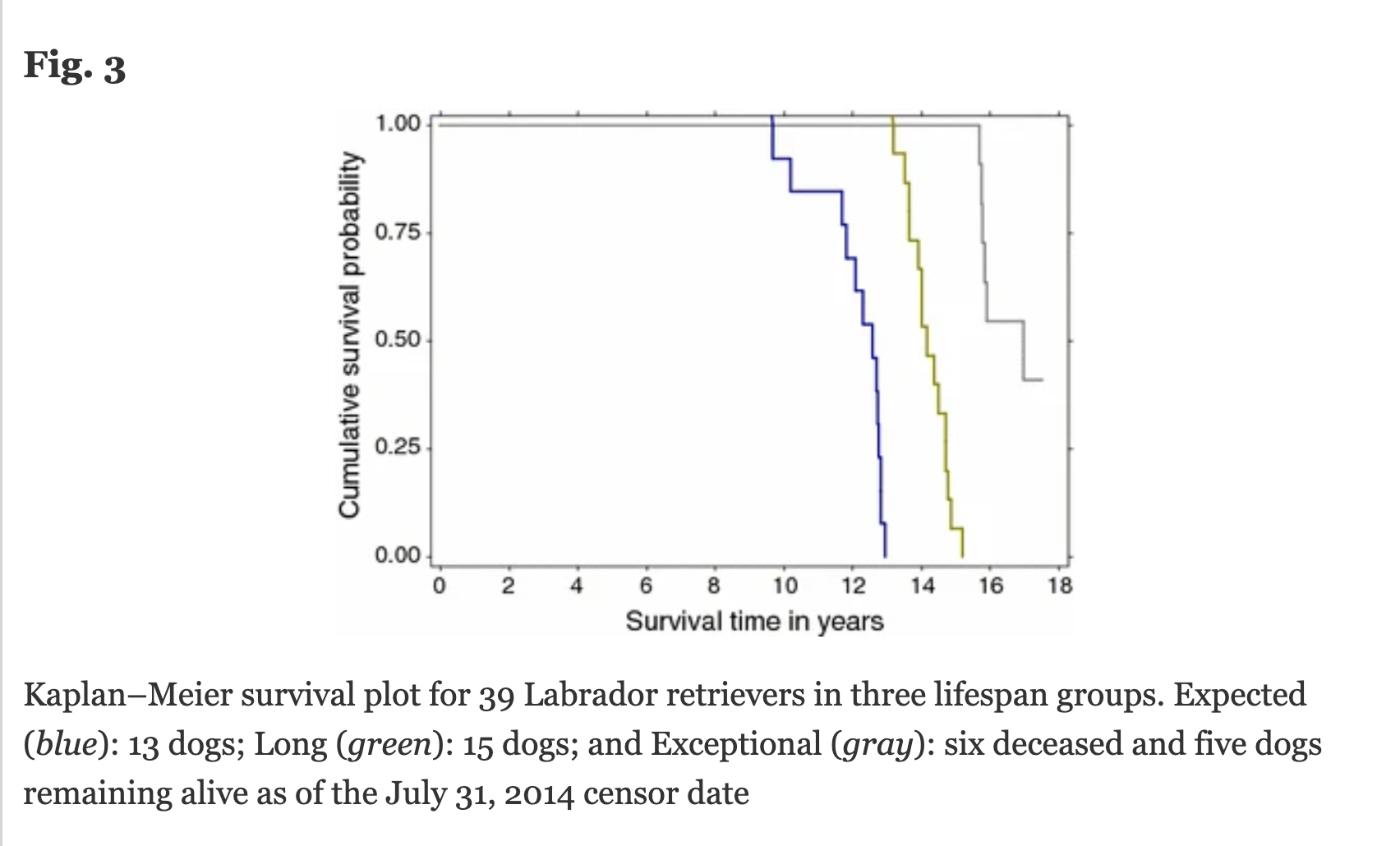
This is a fun paper to read, especially for anyone who has a medium-to-large breed dog including Labrador retrievers, which I happen to have. I know that Dean has commented on a few studies involving Labrador retrievers on this forum before, though I didn't see this one offhand. Some highlights of the study include: A study involving 39 Labrador's, 11 (28%) of which reached at least 15.6 years of age or greater (which the researchers refer to as 'exceptional') Of note the typical Lifespan of a Labrador is 12 years of age These 'exceptional' long-lived dogs accumulated fat slower, though still had similar declines in lean tissue (they measured this with DEXA scans) There are mixed results about the impact of neutering on health/longevity in general Long-lived dogs have a delayed onset of disease (this sounds just like long-lived humans and the compression of morbidity usually experienced) The living conditions for the dogs in this study were fairly well controlled for and sounded pretty good for animals in captivity The dogs were fed twice a day and using a fairly normal commercial chow (which is to say that it wasn't particularly healthy IMO) Female dogs were 10x as likely to reach the 'exceptional' age (again, this sounds similar to humans) Interestingly, 90% of the dogs in this study met or surpassed average life expectancy for the breed Perhaps this suggests that even basic medical care goes a very long way in supporting longevity... at least if you are a cute and cuddly Labrador in captivity getting regular check ups and being closely monitored. To quote directly - "Somewhat paradoxically, the dogs in the Long lifespan group of the current study lost weight between the ages of 9 and 13 years whilst the Exceptional lifespan dogs maintained or slightly gained weight during this time period." This makes me thing of centenarians who need enough mass to protect against frailty without being obese. There were still 5 Labradors alive at the end of the study that were all 16-17 years old! The researchers state - "There are many factors that may have contributed to the ability of these dogs to exceed a typical lifespan and reach exceptional longevity. These include genetics, husbandry, preventative healthcare, socialisation, housing and environmental enrichment." Cancer was the most likely to kill all ages of dogs and was most prevalent in the 'expected' survival group " In the current study, cancer was the cause of euthanasia in 54 % of the dogs that lived to an Expected age, 27 % in the Long group and 33 % in the Exceptional group." The Kaplan-Meier survival plot can be seen below. And because who can resist a cute Lab, here's my own who I hope to have live a long and healthy life! He is about 16 months in this photo from a while back. Even for a non-dog owner the paper could be an enjoyable read!


-
Yesterday Chris Macaskill from Plant Chompers released a thoughtfully researched video titled "The Shocking Reality of High LDL Cholesterol." The video starts by exploring the nuisances of why insurance companies don't care about your high LDL cholesterol and briefly explores variables insurance companies in your policy eligibility (some variables here were quite surprising to me - particularly those that expose the patient to radiation like CT scans). Chris goes on to explore LDL/HDL cholesterol and it's association with disease, including through the Coppenhagen heart study. When all is said and done, the video is a great exploration of the "LDL is good for you bandwagon" that much of the internet seems to be on at the moment.
-
Thanks for gifting this article to us Dean. The article captures the possible benefits of CR along with the limitations quite nicely. I have to give the writer a great deal of credit for producing an article that is fairly easy to read for the layman, myself included. As the article states and concludes: It’s difficult to definitively answer whether intermittent fasting, calorie restriction or a combination of the two could cause people to live longer. With nearly 1000 comments at the time of this post, it sure got a lot of attention!
-
Is Low LDL Bad For The Epigenetic Pace of Aging?
drewab replied to Mike Lustgarten's topic in General Health and Longevity
I really appreciate the longer video here Michael. It is a bit wild to think that no foods/nutrients are significantly correlated with DunedinPACE. Nice work getting to 11th or 12th on the Rejuvenation Olympics leaderboard (even if that isn't your overall goal). How many names have been submitted? I heard it's about 4000 at this point, which would make your results pretty impressive! I don't understand why a higher LDL would result in slower aging. Intuitively this just doesn't make sense to me and it doesn't square up with the Ornish/Esselstyn studies that have reversed heart disease and had patients with very low LDL's. I know that this is obviously different than aging and all-cause, mortality, I'm just trying to square this up in my basic brain. I'll be curious to see how this shakes out with more tests. Are calories associated with DunedinPACE in your data? I commend you for your detailed testing of SFA, LDL, and Dunedin pace without "blowing up the system" as you put it. -
Julie Gibson Clark recently did an episode of the Ben Greenfield podcast. In this episode Julie shares about: The protocol that she has used to obtain her results as part of the rejuvenation olympics. Her diet, exercise, sleep, meditation, and heat/cold routines. Her younger years and the significant stress she faced (divorced, frequent moving, lumps in her breast, kidnapping attempt at knifepoint). Her genetic profile and it's possible influence on her results. Her eating window, use of NOVOS/supplements, and discovery of Bryan Johnson. Her love of cooking, the importance of eating in a parasympathetic state, her intersection with religion/spirituality. In some ways, what punctuates most of this is how "down-to-earth" Julie is about her protocols in particular. She follows them most of the time (about days per week) but still enjoys meals out with friends/family on the weekend and isn't too obsessive about her protocol. Julie doesn't go off the rails and is still sensible but has struck a balance that many people would find appealing.
-
35% Increase For Heart Rate Variability Since 2018
drewab replied to Mike Lustgarten's topic in General Health and Longevity
Those are some impressive changes with RHR and HRV over time. What do you make of the slightly lower HRV in 2021 that you experienced? -
Has anyone seen Bryan Johnson's Project Blueprint?
drewab replied to Alex K Chen's topic in CR Science & Theory
Agree or disagree with the details, I think many people here will derive value from this! -
Thanks Igor and Tom for your responses in this thread. I largely agree with what you’ve posted. So with that being said, a natural question that comes from this is who do you consider to be better sources of information. A few people come to mind including the likes of Valter Longo and Luigi Fontana, while avoiding characters like David Sinclair and Andrew Huberman.
-
https://nymag.com/intelligencer/article/andrew-huberman-podcast-stanford-joe-rogan.html There’s an incredible amount of both backlash and support in response to this interesting (and damming) look into Andrew Huberman’s personal life including what appears to be multiple affairs and deception. It’s a very long read but is well worth it.
-
Supplements that might counteract the effects of CR
drewab replied to BrianMDelaney's topic in CR Science & Theory
This is an interesting proposition. I suppose the short answer is that we do not know and are unlikely to know anytime soon. You are correct that many drugs are just plain dangerous to everyone and that they are risky regardless of who you are (with your mention of fat burners, ephedrine comes to mind). There are a number of people, like Michael Lustgarten, that have diagnosed hypothyroidism and have taken Levothyroxine for very extended periods of time. But this is a hormone naturally found in the body, so it seems biologically safer... in my opinion. It is interesting that these hormones are also mentioned, given that the body naturally produces them. Perhaps it's neutral or less harmful to take these hormones given that the are least found in the body. I do wonder about people who take these hormones and are diligent about monitoring them (and keep things well within the normal range). I always find it impressive when some individuals (like Michael Lustgarten or Paul McGlothin) are able to maintain relatively high levels of testosterone. This has not been my experience as my levels trend towards lower... though I'm more or less okay with it. As a point of interest, here were my levels a few weeks ago with I them tested (14.5 nmol/L which is 418 ng/dl for my American friends). At the end of the day, my speculation is that there are probably a plethora of drugs/medications/interventions that work counter to the effects of CR, but that there is probably not a lot of data on them.
-
My continuous glucose monitor (CGM) logging [and health notes]
drewab replied to Alex K Chen's topic in Chitchat
At 98.6 lbs, I'm curious what your height and BMI are. You are certainly on the very light side of things! -
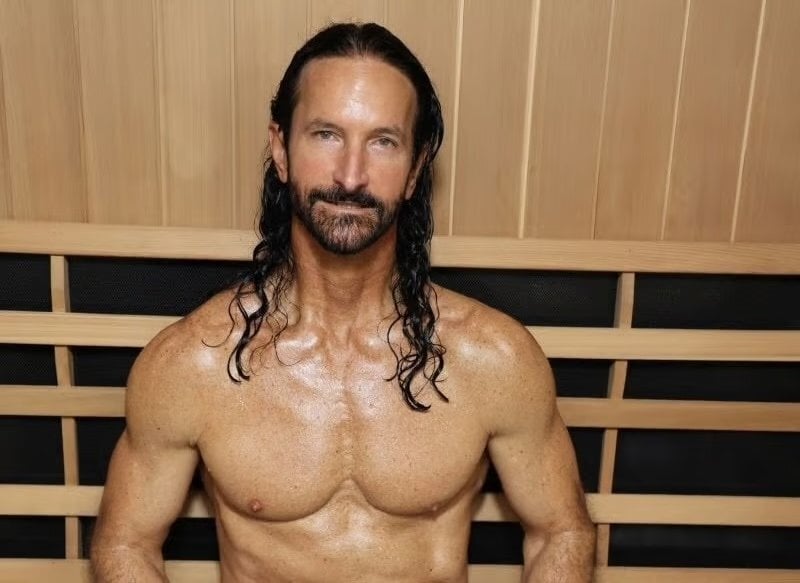
I recently have been reading about Dave Pascoe who ranks #6 on the "Rejuvenation Olympics" leaderboard. He looks fantastic and has a pretty solid regime that many people here will find of interest. Dave's comprehensive website is here. The brief article below is here. Who we're talking about: Dave Pascoe, a retired systems engineer. Pascoe is 61 years old, but he looks (and physically is) more like a 38-year-old. And the news is: Pascoe currently sits at #6 on the Rejuvenation Olympics relative leaderboard, one spot above Rejuvenation Olympics founder Bryan Johnson. Pascoe's epigenetic age is 37.95, and his speed of aging is 0.66 biological years for every calendar year. How does Pascoe stay so young? His philosophy is to look at what successful slow-agers are doing and emulate that. That's translated into many longevity interventions: Exercise every day Diet consisting of whole foods, mainly fruits, vegetables, and seafood Cold therapy Plasma donations to gradually filter his blood Hyperbaric oxygen therapy Occasional fasting Rapamycin 120 supplements daily Whoa, hold on: Pascoe's approach might sound demanding to you, but it's quite subdued compared to the longevity regimen of someone like Bryan Johnson. Unlike Johnson, Pascoe doesn't restrict calories, isn't vegan, doesn’t use testosterone replacement therapy, and doesn't get a battery of tests to check on each of his organs. He estimates his entire protocol costs less than $30k per year, compared to Johnson's $2M per year. So what does this mean for you? Pascoe's results show that extending healthspan (and remarkably youthful looks) is possible using interventions available today at a manageable budget. If you'd like to find out Pascoe’s entire regimen, he documents it on his site. It's worth taking a look there. In the words of Pascoe himself, "I only wish I knew & applied everything I know now, decades ago!"
-
My continuous glucose monitor (CGM) logging [and health notes]
drewab replied to Alex K Chen's topic in Chitchat
I don't have anything to add, but I wanted to say please keep posting - I do find this interesting to follow! -
-
Should we all be drinking wine?
drewab replied to mikeccolella's topic in General Health and Longevity
Used to is the key here - he does not anymore and has quit consuming alcohol altogether. This is from the comment section included on this video: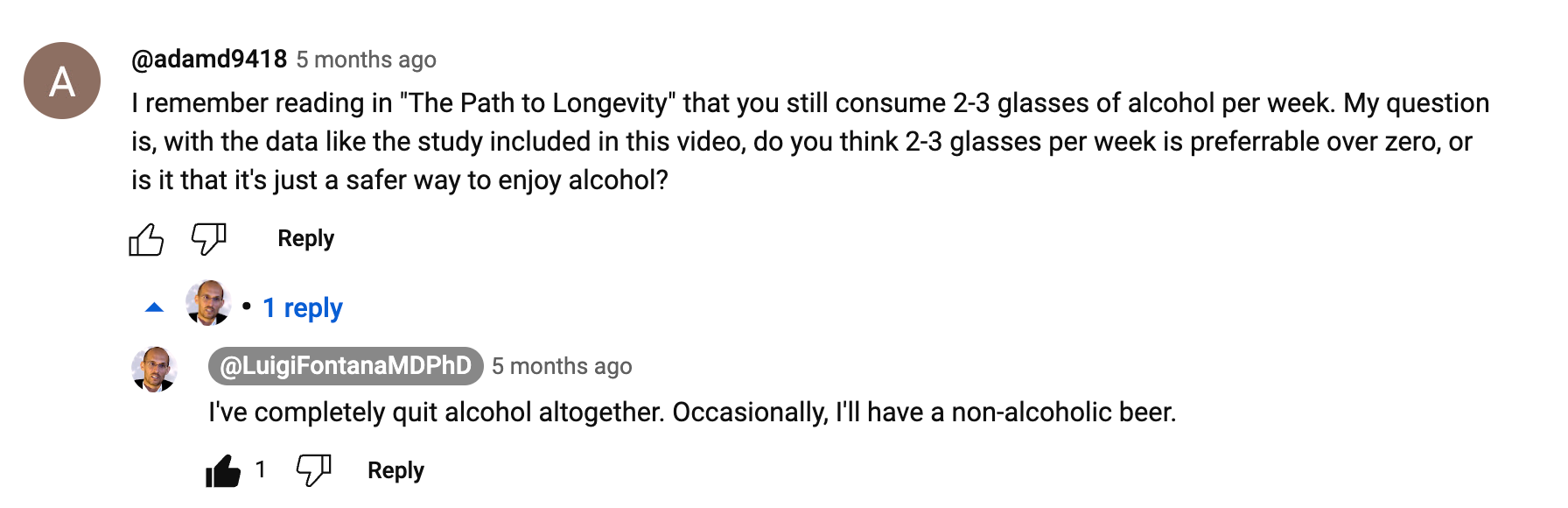
-
In this video Dr. Greger and his team of 22 staff at Nutritionfacts.org are mentioned:
-
There is no salesmanship whatsoever. 100% of the proceeds from all of his books, speaking engagements, and the likes go to charity.
-
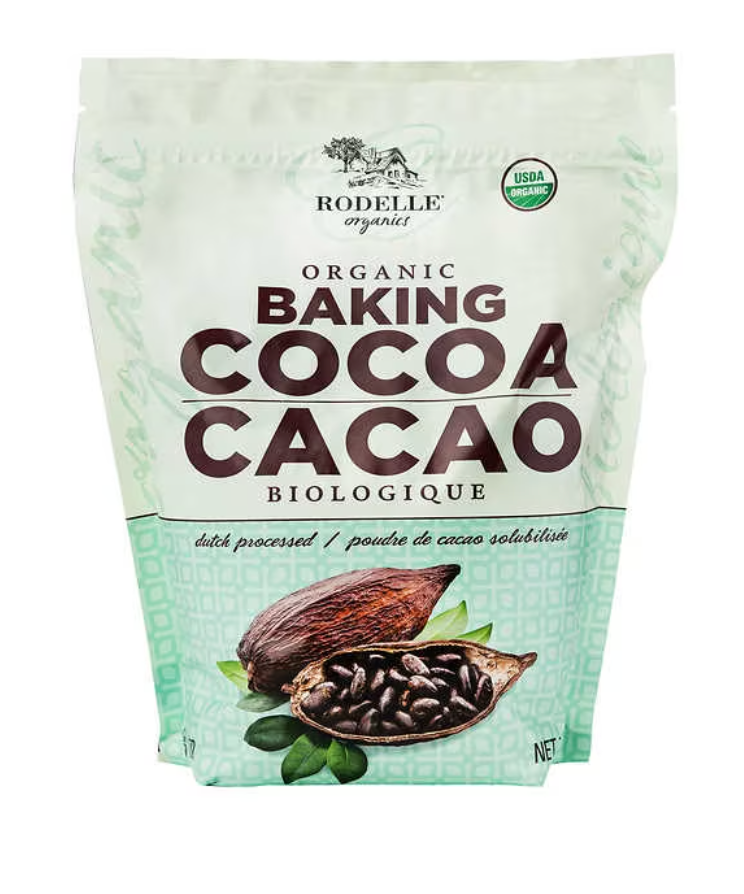
Thanks for sharing this Dean. That's great news that the cadmiun issue has been resolved. I wonder exactly how it was resolved. Does Consumer Reports have any data on Rodelle Organics? The primary reason I chose it is simply that it's extremely well-priced at Costco.
-
Has anyone seen Bryan Johnson's Project Blueprint?
drewab replied to Alex K Chen's topic in CR Science & Theory
I have watched A LOT of interviews with Bryan Johnson and this is hands down the best! -
A biological age of 34.3 vs a chronological age of 51.0 is certainly something to be proud of. I am curious as to why PhenoAge would increase 0.9 per year and not 1.0 per year. Would the creators make it so that one calendar year results in a 1.0 increase for the "average" person? The creatinine graph for those above 40 is quite interesting. I guess that's when years of unhealthy lifestyle starts kicking in for some people? (Or those with unlucky genetics and such start to feel the effects). Your albumin levels are so youthful that isn't even a population with numbers as good as yours. Well done! I'm sad to see that aging.ai disappeared.
-
This is one of the "unlisted" videos included in How Not To Age as part of the supplemental information materials. Some key points included: Being active vs. sedentary lowers your risk of death 30% Being in the top 90% of cardio-respiratory fitness increases life expectancy 5-6 years Walking is one of the safest forms of physical activity Exercise authorities tend to recommend what is achievable rather than what the science says is optimal (i.e. they don't recommend enough exercise) Those in Sardinian Bluezones walked about 12 000 steps per day The video concludes with a maximum longevity dose of walking 30 000 steps per day (I'm sure Dean would love this)... but I'm not sure I follow Dr. Greger's math on this
-
His conclusion sounds about right: "If you are overweight or living off of junk food, eating less is a good idea."