


Ron Put
-
Posts
1,790 -
Joined
-
Last visited
Content Type
Profiles
Forums
Blogs
Media Demo
Downloads
Gallery
Store
Everything posted by Ron Put
-
 Thanks for the video, Mike. I am, however, inclined to see it mostly as a correlation, at least extrapolating from my own results. My lead levels are below detectable, despite the fact that I have drunk tap water for 6 decades and have consumed large amounts of cacao nibs and cacao powder for at least the past decade. Thus I am a bit leery of attributing your low levels to water filter use.
 -
Relative to diet and exercise,I have decided not to fret about tap water. I rarely drink bottled water, unless in an area where there is no potable tap water. I figure that the chlorine and chloramine can't kill all of my gut bacteria, since I feed them with between 60+ to 100+ grams of fiber daily. As to plastics, there are everywhere, from the bags that contain the legumes and grains I buy, to my toothbrush.
-
crsociety.org FINALLY got back online after 4 months
Ron Put replied to Alex K Chen's topic in Chitchat
Thanks for the update, Dean! I was wondering where did the site go... Sad to hear about a member's death, RIP. Good to see everyone else in here, amazingly, you all still look the same! -
Is Low LDL Bad For The Epigenetic Pace of Aging?
Ron Put replied to Mike Lustgarten's topic in General Health and Longevity
It sounds plausible, yep. -
Is Low LDL Bad For The Epigenetic Pace of Aging?
Ron Put replied to Mike Lustgarten's topic in General Health and Longevity
Not necessarily. It's a rapidly fading theory. Dense LDL particles are associated with those with more severe CVD, but by themselves do not appear to have predictive value. Low-Density Lipoprotein Size and Cardiovascular Disease: A Reappraisal | The Journal of Clinical Endocrinology & Metabolism | Oxford Academic (oup.com) -
Omega-3 to Omega-6 Ratio Experiment
Ron Put replied to Ron Put's topic in General Health and Longevity
I just tested lipids again, after a period of a bit lower fat consumption, and months after I stopped Omega-3 supplementation. Back to where I want to be: C-Total: 143 mg/dl HDL-C: 69 mg/dl LDL-C: 64 mg/dl VLD-C: 10 mg/dl Apo B: 60 mg/dl Triglycerides: 39 mg/dl Based on my experiment of 1, the low-fat diet proponents appear to be on the right track, and dietary fat/cholesterol matters in those who have not reached a saturation point. I consumed about 30g of flax daily and reduced nuts (walnuts or almonds) to about 12-14g per day. An avocado once every five days or so. Raw cacao powder of about 10g daily. This confirms my guess, based on reading the published studies, that in healthy people, Omega-3 supplementation may be detrimental to what is currently considered an optimum lipid profile. -
How Not To Age: Dr. Michael Greger
Ron Put replied to drewab's topic in General Health and Longevity
Haha, this is our endless argument 😄 I used to be a proponent of olive oil until I started reading the actual studies and noticed patterns that raised questions for me. I experimented with eliminating olive oil from my diet at home, and my lipid markers improved significantly. As Greger says, you don't know until you put it to the test. I strongly suggest that you test eliminating olive oil yourself for a couple of months. -
Should we all be drinking wine?
Ron Put replied to mikeccolella's topic in General Health and Longevity
As noted before, red wine studies are almost always influenced by the wine industry. Neither the Okinawans nor the Adventists drink red wine, yet they are (or were, in the case of the Okinawas) the longest-living groups in the world. I used to believe the headlines when younger, then started paying attention to details in the studies, and the final push to almost stop drinking was the tracker data staring me in the face the morning after I had a glass or two. The data after drinking a glass or two of wine basically mirrors the data after eating a couple of slices of rich cake. I still do both occasionally, but I no longer have illusions that either is beneficial to my health. -
How Not To Age: Dr. Michael Greger
Ron Put replied to drewab's topic in General Health and Longevity
I'd seen this a while ago. I like Carvalho. While he is a vegan, he is a believer in olive oil and the "Mediterranean diet," and also believes that most people will be turned off if pushed, so he generally qualifies with talk of "moderation," whatever that means. His main accusation here is that Gregger is against olive oil "despite the mountain of evidence" and against fish consumption. My problem is that based on my own research, that "mountain of evidence" for the benefits of olive oil (including EVOO) and Omega-3s is pretty much all industry generated or influenced, and it is not supported by the evidence, IMO. So I'd argue that Carvalho is wrong on that one, not Greger. For what it's worth, I don't think I agree with anyone unconditionally. But I find Greger (and Carvalho) better than most. -
J-shaped association between dietary thiamine intake and the risk of cognitive decline in cognitively healthy, older Chinese individuals "Conclusions This study revealed a J-shaped association between dietary thiamine intake and cognitive decline in cognitively healthy, older Chinese individuals, with an inflection point at 0.68 mg/day and a minimal risk at 0.60–1.00 mg/day of dietary thiamine intake." Weird study that is lighting up the news cycle. At first glance, I am inclined to take it with a large grain of salt. Yes, there is increased cognitive decline in those consuming over 1g of dietary thiamine, but there is also greater cognitive decline in non-smokers compared to smokers, and in the non-boozers vs boozers. Cronometer says I consume about 2.6g of thiamine per day, with the top three sources being wheat germ, flax, and nutritional yeast. Perhaps I am already too stupid to take this seriously.
-
How Not To Age: Dr. Michael Greger
Ron Put replied to drewab's topic in General Health and Longevity
Well, there is certainly a PR campaign, and also fundraising for the non-profit. But at first glance, it looks like most of the money goes to pay for staff and presumably research: Nutritionfacts Org Inc - Nonprofit Explorer - ProPublica Greger makes just over $200k a year in compensation, which is less than what Dayspring made back in 2010 shilling fish oil for Lovaza, and almost four times less than what Attia made back when he was trying to prove the miracle of keto. So, Greger is at least less greedy. As I mentioned, the book's 13000 studies are often references to old research and other books and videos he's posted, and I see nothing wrong with touting this rather high number. He is obviously trying to sell books and he does proselytize what he believes, but that's to be expected. I don't agree with everything Greger pushes, of course. Omega-3 supplementation is one such topic. -
-
How Not To Age: Dr. Michael Greger
Ron Put replied to drewab's topic in General Health and Longevity
mccoy, as far as I know, Greger has a whole team of research assistants, data analysts, and fact-checkers. Greger is also fairly open about the fact that some of the studies he cites may be flaky and tries to place the data in perspective. Keep in mind that he and his team have been producing content for years, and How Not To Age is referring to a lot of stuff published before, in one form or another. I am just over halfway through the book and overall I am enjoying it, and have picked up some useful tidbits. The spot checks of sources I've done largely support his arguments. I'd suggest that you reserve judgment until you read it, you may be surprised to an extent. -
I was thinking the same a while back, so I switched from cacao nibs to cacao powder, since powder is much lower in fat. Moreover, much of the saturated fat in cacao is stearic acid, which does not appear to raise LCD-c. The palmitic acid content of cacao powder is about 4% or less of the weight, so the 10-15g I drink nowadays is not likely to have a great effect. But to place all this into perspective, even back when I was consuming about 40g of nibs a day, my LDL-cholesterol did not seem to be affected nearly as much as when I was taking 900mg of Omega-3 supplements per day. See this for my Omega-3 n-1 experiment. EVOO seems to affect my cholesterol similarly to Omega-3 supplementation, so now I consume EVOO rarely.
-
Thanks Mike! My EGFR is always above 100, and my creatinine is low. I can do about 55 push-ups these days, so not worried about muscle mass too much, even though I am pretty lean (11% fat). But wondering if it's worth testing Cystatin C, since I have never done it and don't have a base to compare future measurements against.
-
Is High LDL-c Harmless in Otherwise Healthy People?
Ron Put replied to Todd Allen's topic in General Health and Longevity
An interesting development that may potentially treat hypercholesterolemia: Verve_AHA_2023_LBS_for website.pdf (vervetx.com)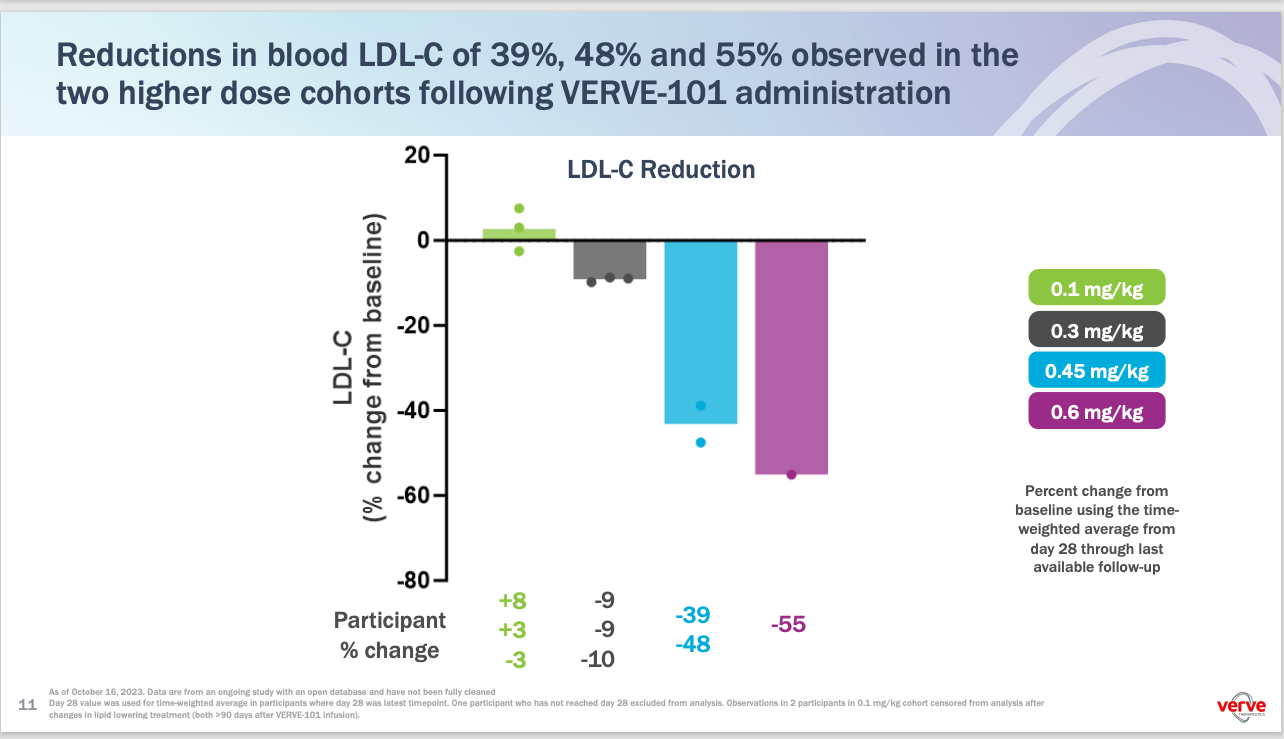
-
Are omega-3's as pro-longevity as people say they are?
Ron Put replied to Alex K Chen's topic in General Health and Longevity
I am with Tom on this. Currently, AI is basically a search engine that summarizes the "top" sources it finds. If these sources are biased, the result is equally biased. The above cut-and-paste is largely useless, as it's similar to posting the top search results from Google, but with summaries. It often is a good start if one is researching a topic, but it's definitely not unbiased and often is not entirely accurate. AI will get better, but I am not sure that it will be unbiased in the near future. -
Thanks for posting the list, Dean! Cadmium in cacao first made the news in a big way when ConsumerLab tested and publicized it. It helped ConsumerLab get tons of publicity and boosted their subscriptions and revenue by a lot. But after testing myself and researching the topic, I came to the conclusion that it was much ado about nothing, or almost nothing. ConsumerLab piggybacked on EU regulations that tightened the cadmium guidelines significantly, allowing it to present some of its results as unsafe. But cadmium occurs naturally in volcanic soils, and it's relatively greater in South America, where virtually all of the cacao sold in the US is sourced. In Europe, a larger portion of the market is made up of African or SE Asian sources. I personally like the taste of Balinese cacao better, and tests show it to be much lower in cadmium, but nowadays it's virtually impossible to find in the US. Back then I was consuming cacao to the tune of about 40g per day, mostly nibs, from a variety of brands. After years of such consumption, my blood tests were repeatedly below LabCorp's sensitivity. Has anyone who consumes cacao also tested for cadmium and what were the results?
-
Are omega-3's as pro-longevity as people say they are?
Ron Put replied to Alex K Chen's topic in General Health and Longevity
There is already a rather extensive discussion here, see the link above. There is a deluge of Omega-3s papers from industry-related or financed sources, but generally poor replication. This paper is no exception, coming from InsideTracker. They sell tests and offer subscriptions to a "personalized" guidance platform based on tests that they resell for Quest, and then you get "personalized" nutrition recommendations, and of course supplement recommendations, with Omega-3s prominently featured. -
Surely it is. At least if the goal of CR is health, as opposed to temporary weight loss. There are many reports of significant side effects, including of possibly permanent stomach paralysis. Long-term effects are unknown, but unlikely to be beneficial to healthy, non-obese people.
-
Mike, I just watched your latest video, in which you again mention green tea. I am curious, why not matcha, which I understand is more potent?
-
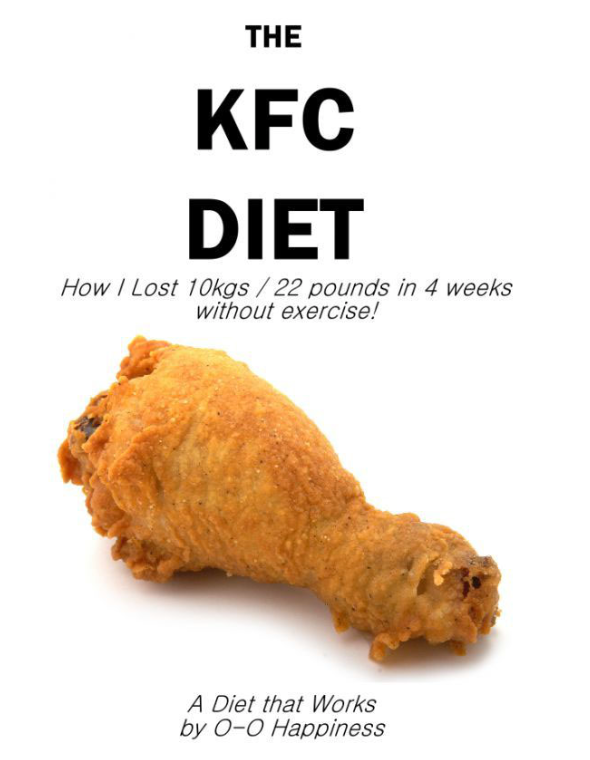
Yep, he is 24. Calcium score is rather meaningless at that age. I had a body type similar to him at 24 and ate KFC. I also smoked back then and it had no effect. High plasma LDL-c and cholesterol in general strongly correlate with atherosclerosis and most likely is a significant contributing factor. Atherosclerosis takes decades to form, but generally, it leads to higher mortality based on available evidence. If Nick stays on keto, the results are likely to start showing up when he is 50. As to whacky examples in the Nick Norwitz vein, here are a couple just as convincing ones: The KFC Diet (I can confirm that at the age of 20, I did not have any adverse effects from frequent KFC bucket meals and did not gain weight. Back then KFC also had tons of transfats, therefore transfats can't be bad either, right?): The MacDonald's Diet: 'Starting off everyone's like "No, you're gunna die, why are you doing this? Rest in peace,"' said Maginnis. 'Now, people are seeing that it's working.' Whether his methods are healthy or not, his (scale) results don't lie, with 21lbs (10kg) lost in 21 days so far."
-
I don't know why it's pointless, unless we are really dealing with "beliefs." If I see a good argument, I am perfectly happy to change my mind. But I have adopted a somewhat low-fat diet precisely because my research led me to a lot of good arguments and evidence that generally low fat is healthier in the long run. As to insulin resistance and high-fat diets, it seems to me that there is pretty well-supported evidence, both in epidemiological and RCSs. Below are two examples: Dietary Fat and the Development of Type 2 Diabetes Link between high-fat diet and type 2 diabetes clarified It also seems like there is more than one way that high-fat diets increase insulin resistance over time, and here is another potential mechanism: “And in [high-fat diet]-fed mice with PKCε intact — which are glucose intolerant — we saw more of the unhealthy, engorged fat cells, that tend to have less access to oxygen and become inflamed.”