


Todd Allen
-
Posts
1,170 -
Joined
-
Last visited
Content Type
Profiles
Forums
Blogs
Media Demo
Downloads
Gallery
Store
Everything posted by Todd Allen
-
I think it highly unlikely a person seeking longevity through CRON and other lifestyle optimizations would place among the elite longevity record holders but not because lifestyle optimizations are of such limited effect as you hypothesize with respect to some gene controlled longevity limit. Rather I suspect it is merely a numbers game which in a sense boils down to luck. Imagine a graph of the age at death of all Americans last year with age on the X-axis and the number who died at that age on the Y-axis. I'd expect a roughly bell shaped curve with a gently rounded peak at something like 77 years falling increasingly steeply through the 80s and 90s rounding off in a small very shallow tail in the 100s terminating at roughly 112 years. Now imagine the graph of the optimizers. I'd expect a roughly similar shaped curve but right shifted significantly. Maybe the peak is at 87 years instead of 77. That would be roughly a 13% gain of average lifespan which I'd consider a decent worthwhile result. But if 1 in 1,000 were longevity optimizers that peak at 87 would be roughly 1/1000 the height on the graph of the peak at 77 for the total population and quite likely a small fraction of the height of the total population graph at 87. It is very easy to imagine the comparatively tiny graph of optimizers curving down rounding off with the tail terminating all fully underneath the total pop graph many years before the tail of the vastly larger total pop graph terminates. I do not consider those achieving extreme longevity as winners of a gene lottery. Common polymorphisms involve tradeoffs. They remain common because they are helpful under some circumstances and don't get weeded out at the rate of universally inferior variations. Life is cut short when ones genes align poorly with ones environment and circumstances. Our longevity interventions such as exercise and diet also involve tradeoffs as evidenced by sweetspots for dosing curves where too much of a good thing is harmful. The tradeoffs and sweetspots differ person to person depending on how our lives and interventions align with our genes. The luck factor is basically how well our lives align with the strengths and weaknesses of our genes. Our tools for optimizing that alignment are fairly crude although I believe it is a skill which some of us develop to a bit better degree than others. But due to the limited numbers blindly optimizing lifestyle based on dodgy statistics of what is commonly best and the even smaller number making serious effort to develop the skill of determining what is best for themselves the optimizers are unlikely to achieve the longevity results of the "luckiest" of the vastly larger population making little effort to optimize longevity. As tools mature and improve for longevity optimization and personalizing optimization and it becomes easier to achieve compelling results especially for gains in health and health span which are more immediately compelling than gains in longevity I expect increasing numbers will play the game and the increasing number of players is a multiplier impacting longevity records. This should soften the perception of our genetic limitations.
-
I've got quart bags and gallon bags. I have little need for bigger ones.
-
I use reusable silicone food storage bags. They come in many shapes and sizes. Plenty of places online carry them.
-
This supercentenarian did not talk about his genes or the exceptional longevity of family. Rather he claims to have been very lucky. If you get hit by a meteor great genes don't matter.
-

Longevity drama: Matt Kaeberlein vs. David Sinclair
Todd Allen replied to Todd Allen's topic in Chitchat
It's not really rapa or nothing. Most agree there are fundamentals such as diet, sleep, exercise, stress management, toxin avoidance, positive relationships, etc. which can get one pretty far despite a lack of agreement on the precise details. I didn't mean to say no one should self experiment with rapa but rather I think getting this particular vet to prescribe it for your dog and buying pills from him is a really bad idea. Especially if one doesn't have the capacity to verify what exactly is in the capsules one might get. Does he expect repercussions if his pills do nothing and people's dogs still age and die at the same rate? I have more confidence a major brand horse paste will have the ingredients claimed. I am also mocking the FDA and I place no value on anything that corrupt incompetent agency says or does. -
Longevity drama: Matt Kaeberlein vs. David Sinclair
Todd Allen replied to Todd Allen's topic in Chitchat
According to the FDA, you are not a horse. And probably not a dog either. So all you longevity peeps don't go getting any bright ideas about achieving escape velocity with dog paste... -
Longevity drama: Matt Kaeberlein vs. David Sinclair
Todd Allen replied to Todd Allen's topic in Chitchat
$105 for 12 0.5 mg capsules or $112 for 12 3.0 mg capsules. Considering the empty capsules cost maybe $0.20 and filling them can be automated suggests to me the pricing has little to do with costs. I'm guessing the calculation is that even at $10 the market would be tiny so let's make as much per customer as possible. -
Longevity drama: Matt Kaeberlein vs. David Sinclair
Todd Allen replied to Todd Allen's topic in Chitchat
Yikes! I just found this: https://helpingpetslivelonger.com/ I don't think Matt has any connection to it other than providing data and visibility but it does illustrate how easy it can be to cash in on any longevity related research. -
Longevity drama: Matt Kaeberlein vs. David Sinclair
Todd Allen replied to Todd Allen's topic in Chitchat
Indeed, I was a bit swayed by your arguments but hoped you were overstating your case. Unfortunately now I'm increasingly inclined to believe you were right on the money. I also am less concerned about Matt's research with rapa and dogs. If it leads to him profiting from pet foods, supplements or medicines then I will reconsider but for the moment I have the impression he is more interested in science then self enrichment. -
https://www.thelongevitynewsletter.com/p/david-sinclair-matt-kaeberlein
-
This is Nick Norwitz. pic taken from:
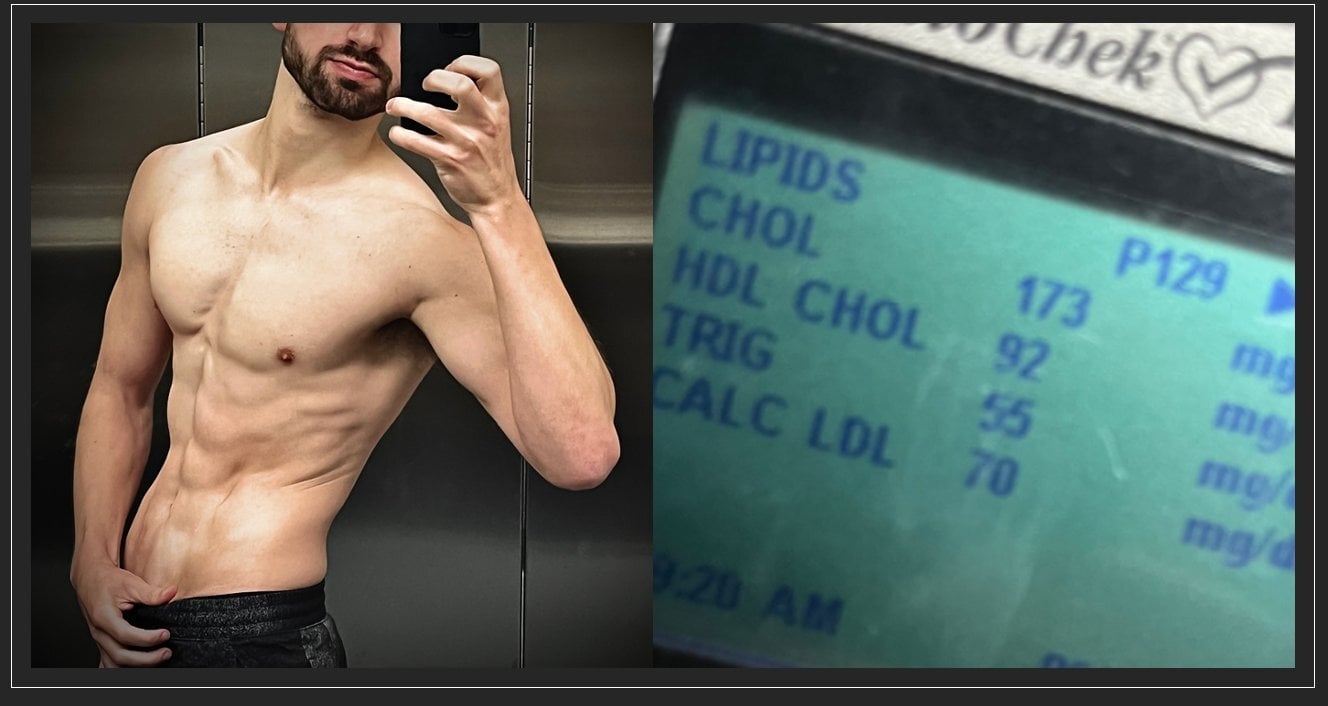
-
You started with a statement about people becoming insulin resistant on a ketogenic diet. I believe practically the polar opposite and that LMHRs are in general exquisitely insulin sensitive. Our viewpoints are so completely divergent that discussion is pointless. Is it even possible for either of us to provide sources or evidence for our beliefs that the other is likely to accept or even seriously consider? The years of covid have left me jaded about the value of discussing strongly held divergent views. It generates a poor return on the invested time and energy.
-
Yes you have long and repeatedly made your preference for ignorance and dogma versus science abundantly clear.
-
That was not the point of the study. The point was as TomBAvoider described, the mainstream understanding of lipid metabolism as embraced by the pharma driven health care system would not have predicted this result. The result however is in alignment with the lipid energy model hypothesis put out by Dave Feldman and associates. Our choices are made based on our conceptual frameworks or models of reality. It is import to investigate when our models fail to predict testable outcomes. Medical and especially nutritional "science" far too often dismiss failures of their models to make predictions as paradoxes. Science riddled with paradoxes is not science.
-
Yes, I was being facetious. Although my desire was to be sarcastic and ridicule your position. You acknowledge that LDL can drop for a bad reason: cancer. I assume you are aware LDL can drop for other bad reasons too. You seem to believe oreos are an unhealthy food choice. And yet you jumped to the conclusion that Nick's drop in LDL was a good thing despite no other positive data suggesting an improvement Nick's health from the intervention which lowered his LDL.
-
Exactly! The oreos caused the cancer which lowered his LDL. And thus his risk of dying from CVD is reduced. Problem fixed!
-
Perhaps I should have spelled it out more clearly but I was speaking about the domain of foods raising or lowering LDL. Nick used oreos because they do not have a health halo. If he chose oatmeal or goji berries people would not have found the result as striking. Note, never in Nick's paper does he characterize high LDL as a problem or lowering it with oreos as desirable. Yet you jumped to those conclusions despite knowing the association of low cholesterol and some cancers. Fortunately we have Ron leading us down the path of oreos possibly being yet another vegan superfood as a handful of oreos and their uber healthy refined plant fats can over power the effects of a diet still based on vast quantities of saturated animal fats. Thankfully we don't have to fear Nick achieving his results through oreo induced cancer.
-
You got to the heart of it, nicely summarized. It is very widely assumed that lower LDL is healthier and thus things which lower LDL are intrinsically good and those which raise LDL are bad. But then how does adding oreos to a diet still rich in animal sourced saturated fats result in a dramatic lowering of LDL to within range from FH levels? While this is the only case I know of testing oreos I expect a great many people could produce similar results if they cared to try it. Myself and many others find the biggest levers to raise LDL are carbohydrate restriction, increasing leanness and recent caloric deficit. I suspect it is actually smaller average adipocyte size rather than body fat percentage or muscle mass increasing LDL volatility in response to carbohydrate restriction/intake. Myself whenever I do a phase of rapid weight loss I can spike my LDL but when I maintain weight LDL drifts slowly down and it plummets when I regain any fat. Changes in diet such as swapping in coconut oil or beef suet for olive oil show no power to raise or sustain my LDL compared to actively reducing body fat and restricting carbohydrates.
-
Holy smoke! I guess I have been living under a rock as I had no idea Tesla was even in the top 10 let alone number one. Your article was paywalled but a quick bit of searching suggests that not only is the Model Y the biggest seller but the Model 3 is doing well too. I thought this scene from a recent movie was just a bit of comic absurdity but knowing those sale numbers gives it a more chilling aspect:
-
She stopped smoking and then died just a few years later... Temporality may be essential for causal inference but it is not sufficient. And while there are a huge number of studies showing risk reducing benefits of nicotine for ailments of advanced age such as Parkinson's and Alzheimer's suggesting diseases of aging may merely be nicotine deficiency syndrome I am not ready to blame her death on giving up smoking. Myself having never smoked at all I hope elevated cholesterol is sufficient to ameliorate nicotine deficiency syndrome.
-
https://www.mdpi.com/2218-1989/14/1/73
-
Throughout the pandemic and for a couple year prior my diet has been mostly fatty red meat, eggs, fish and full fat dairy with plant sourced foods largely limited to spices, herbs and small amounts of fruits and veg to make sauces, salsa, etc. Despite intentionally not masking or social distancing whenever possible or taking any other prophylactic measures such as vaccines or horse paste I have had no significant sickness requiring more than wiping my nose once or twice. A 39% lower risk of what was apparently essentially zero would be difficult to measure with significance.
-
Don't forget B12.
-
SARS-CoV-2 Vaccination and the Multi-Hit Hypothesis of Oncogenesis
-
Never tried jellyfish but my diet is roughly 95% animal foods and I have yet to find anything that doesn't come out ok cooked sous vide. I thaw, cook and refrigerate food in reusable silicone food storage bags which supposedly don't leach chemicals as most plastic bags do.