


mccoy
-
Posts
3,916 -
Joined
-
Last visited
Content Type
Profiles
Forums
Blogs
Media Demo
Downloads
Gallery
Store
Everything posted by mccoy
-
I started to supplement with L-carnosine, as part of Sandra Kauffman's Panacea protocol, which I modified a little. Kauffman's model is conceptually satisfying and she has cited a lot of research An interesting video on L-carnosine.
-
 I started to post in that forum as well, it's more oriented to pharmacological interventions for longevity and the detail in this regard is extreme, the latest research is published and discussed with all minutiae.
 -
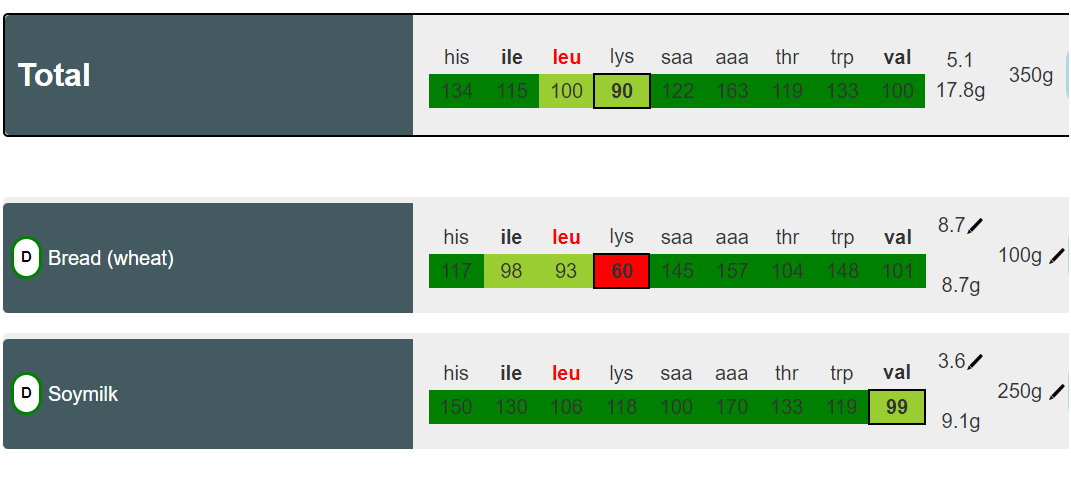
The same mixture but soymilk instead of cow milk. A decent 90 is the result. Please note how DIAAS of cow milk = 144 is much superior to DIAAS of soy milk=99. This constitutes evidence that dairy products (nonfat or lowfat) can be used very advantageously in a CR regime since you can use less (lower calories) with the same amount of actually digested EEAAs-
-
Nice, I've tried a mixture of 100 gr bread and 250 gr milk, the DIAAS in bread is a modest 60 (limiting AA lysine), but in the mixture turned to 109

-
You are welcome, all the best for your efforts at improving health & longevity
-
The most recent record of ice bath: 4 hours +. Wim hof sounds like a wimp now!!!
-
This may mean that vegan is all right with you, and all right with many other people, but not that it is the exclusively healthy diet for everyone, with all other regimens favoring an early death. Dr. Greger wears huge pink glasses when speaking about the vegan regime. Many people noticed that, including some of his staunch supporters.
-
There could be so many reasons for that, not excluding the abuse of boiled eggs and chicken nuggets, abuse which Dr. Carvalho does not suggest, on the contrary...
-
Jim Pierce, with all due respect, belief is one thing but truth can be different. I would encourage you, if you have the time, to watch or listen to the following video (already posted in this same thread). Dr. Carvalho follows a vegan diet, but that does not prevent him from fact-checking the affirmations of Dr. Greger, who at times behaves more like a salesman than like an objective disseminator of science. This does not mean that the diet proposed by Dr. Greger is unhealthy. This just means that Dr. Greger is not a perfect example of scientific honesty. He remains an impressive salesman though.
-
I've read 3 of his books, including his most recent one. They are not overwhelming. They are good at encouraging a healthy dietary regimen but from the scientific point of view, they are too biased toward his declared vegan agenda. Veganism is a choice, often an ethical one, the scientific literature does not support the absolute and overwhelming benefits Dr. Greger touts around. Of course he's doing a good job in disseminating an overall healthy diet, although I'm sure his proposals do not fit everyone. I'd encourage you to keep following his advise which is in the upper percentiles of quality as far as the internet influencers are concerned.
-
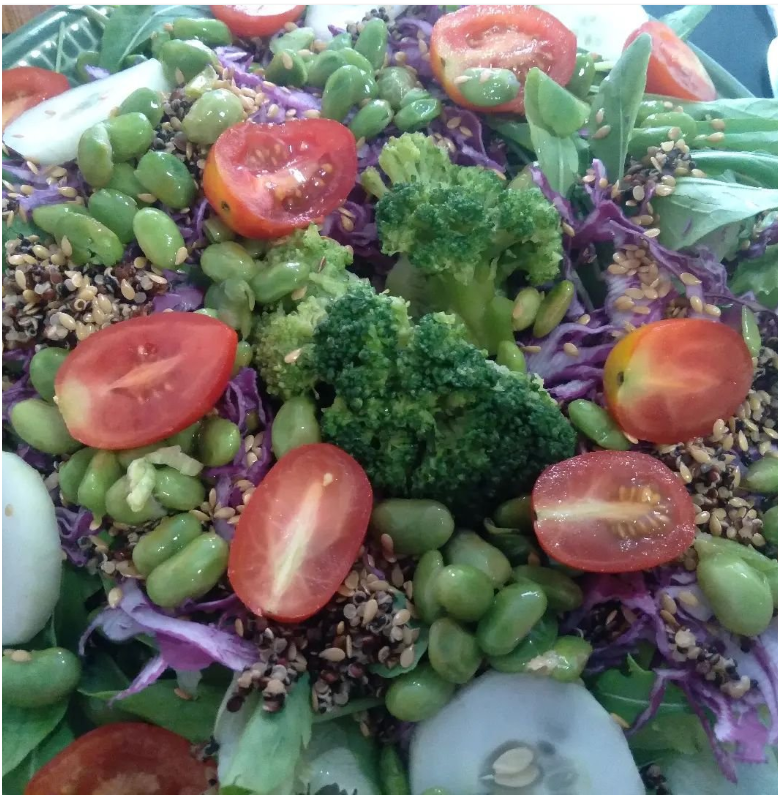
Very good dish, I had a similar one today :
-
What you learn from Dr. Greger is not the complete picture, rather a filtered outlook. He likes to omit information and distort the data to the advantage of his vegan agenda. That's a well-known aspect. Of course, he's waaaay better than so many crazy influencers out there.
-
crsociety.org FINALLY got back online after 4 months
mccoy replied to Alex K Chen's topic in Chitchat
Hi all, hope everyone is well. It's good that the forum has been resuscitated, there is some good reference material in here. -
I bought and read the book. I found it underwhelming, just as I found Peter Attia's book underwhelming. Often, when big expectations are built, the result is disappointing...
-
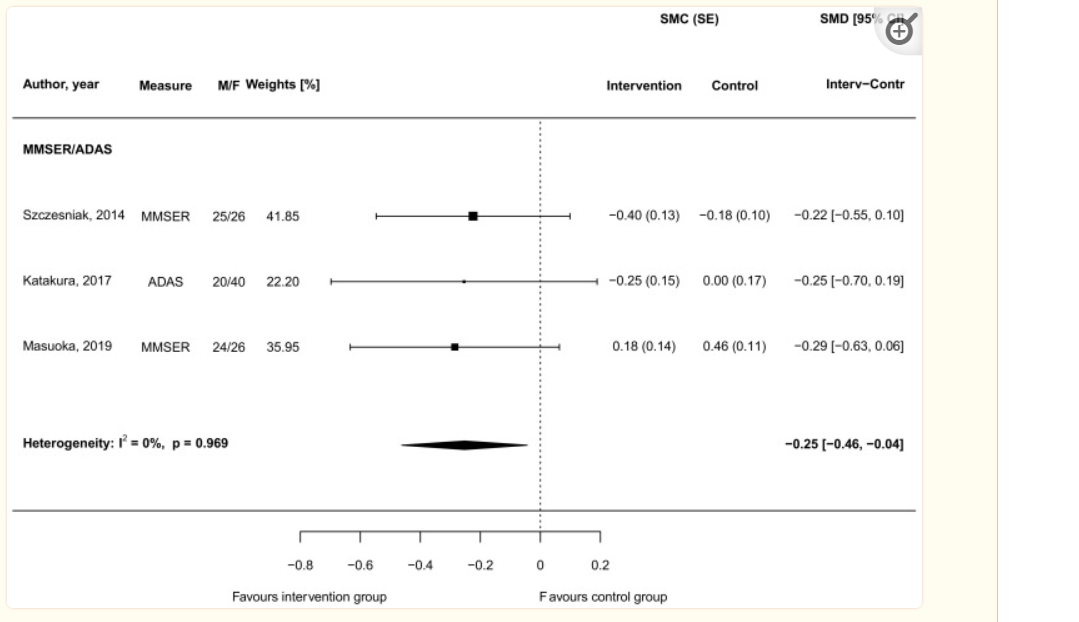
The same author published a metanalysis of clinical trials on carnosine and cognitive decline/memory/depression, where only 3 studies resulted to be rigorous enough. The analysis showed some benefits in cognitive decline, less in memory, no benefit in depression. The population was elder people with age-related cognitive decline and people at risk of AD. I agree that the results are not exceptionally glamorous so far. Maybe, as already written, carnosine is not worth the money, or better it may be worth the money for those who may be vulnerable to cognitive decline. But who isn't at a certain age ??? A selective deficit of carnosine has been linked to cognitive decline in AD, also promoted by the age-related increase in CN1 activity in the brain. Along this line, different preclinical studies have demonstrated the neuroprotective and procognitive effects of carnosine in experimental models of AD. It is; therefore, expected that carnosine supplementation can improve cognitive function in elderly subjects with age-related cognitive decline as well as in MCI patients with a high risk to develop AD. We conducted the present systematic review with meta-analysis to investigate the therapeutic potential of carnosine against cognitive decline and depressive symptoms in elderly subjects. We found that carnosine/anserine administered for 12 weeks, at a dose of 500 mg−1 g/day, improved global cognitive function and verbal memory in the four selected double-blind, randomized, placebo-controlled trials, whereas no effects were detected on depressive symptoms. These data suggest preliminary evidence of the clinical efficacy of carnosine against cognitive decline, both in elderly subjects and MCI patients, although larger and long-term clinical studies are needed in MCI patients (with or without depression) to confirm the therapeutic potential of carnosine.
-
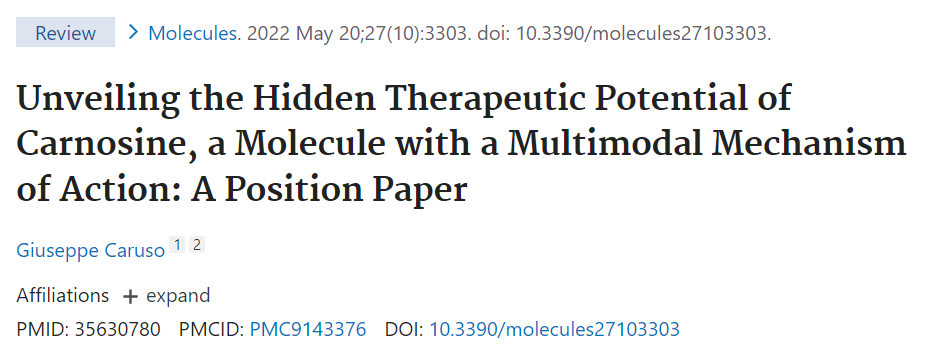
This is one of the most recent reviews on carnosine. I myself am interested in this potential antiaging supplement. According to the author, the picture is still a little confused. https://pubmed.ncbi.nlm.nih.gov/35630780/
-
What I know is that Sardinians sure have been, in all the Italian regions, the citizens with the lower average stature. I don't know though about the average stature in the Ogliastra province.
-
Good collection of data!
-
glucose versus cholesterol optimization
mccoy replied to mccoy's topic in General Health and Longevity
I've been pondering on such an aspect but have no answers yet, unless the possibility that the glucose homeostatic system needed a reset and is now working again with full efficiency. Very wild speculation, based on some discussions by Valter Longo and Peter Attia. My moderately low carb intervention was 2.5 years long. Another possibility is that my relatively high FG of 2.5 years ago (106 mg/dl) was due to an anabolic stint driven by mTor acutely high activity after an abundance of exercise and nutrients. So it might have been actually a tool to reinforce the complex mechanism, rather than a cause of its malfunction. Another wild speculation. -
Yes, opinions are discordant among the specific researchers. I recently listened to Joan Mannick, the one who designed the successful human trial on Rapa and immune system reaction (pasted below). She says that the right age to start taking rapa or analogs would be 70 or 75 years and that we have no data yet to start an earlier and safer intervention. Other recognized eminent experts in the field like Matt Kaberlien, Attia and more are taking themselves rapalogs before their 60s. Of course, intermittent dosages now are the only ones advised for longevity. Presently, my opinion is that the choice would depend on individuals. Good health, before 70s, better to remain on the safe side and not gamble. Besides, in the next decade, there would be probably a surge in trials on Rapalogs and other longevity drugs or supplements and we'll be able to take a more informed decision. But, again, it depends on subjective conditions and, as Tomb hinted at, even on our risk appetite.

-
The entrance of Matt Kaberlien into the world of podcasts is sure very welcome. It's another rigorous view of the hypercomplex world of human longevity. In this podcast he speaks just about of everything, it's good to have another conceptual framework from an eminent researcher.
-
LOL! Attia! It took a few seconds to understand.
-
glucose versus cholesterol optimization
mccoy replied to mccoy's topic in General Health and Longevity
I'm reading the above after one year. Due to a prolonged catabolic state triggered probably by inhibition of average mTOR levels due to lower amounts of nutrients, I went down to a BMI of 22.1; After that, I designed a new regime which entails a higher glucose signal, by eating plenty of fresh fruit (about 750 grams per day), honey, whole wheat bread and more, with 220 gr daily average net carbs, more than double the previous amounts. Plus I'm eating on the average 185% the protein RDA, plus ad libitum healthy fats. Of course, I needed the hunger to return. On top of that, I started taking creatine again. Presently, I gained a single kg, but I learned that it takes patience to reverse homeostatic trends. The most interesting aspect is that, notwithstanding the substantial increase in carbs, fasting glucose is keeping the same, at 90-95 mg/dL. -
Saul, it was not ketotic strictly speaking, but evidently the energy substrate was too low, I was really drifting into a CR phenotype with very little adiposity and decreasing muscle mass. I also found on repeated occasions that if I lower the glucose signal I'll go into a catabolic state unless I'm able to keep the energy substrate very high by eating plenty of fats (and enough protein).
-
Manuel, no, I've always included animal protein in the form of dairy, which is, in moderate amounts, highly digestible and well tolerated by my system.